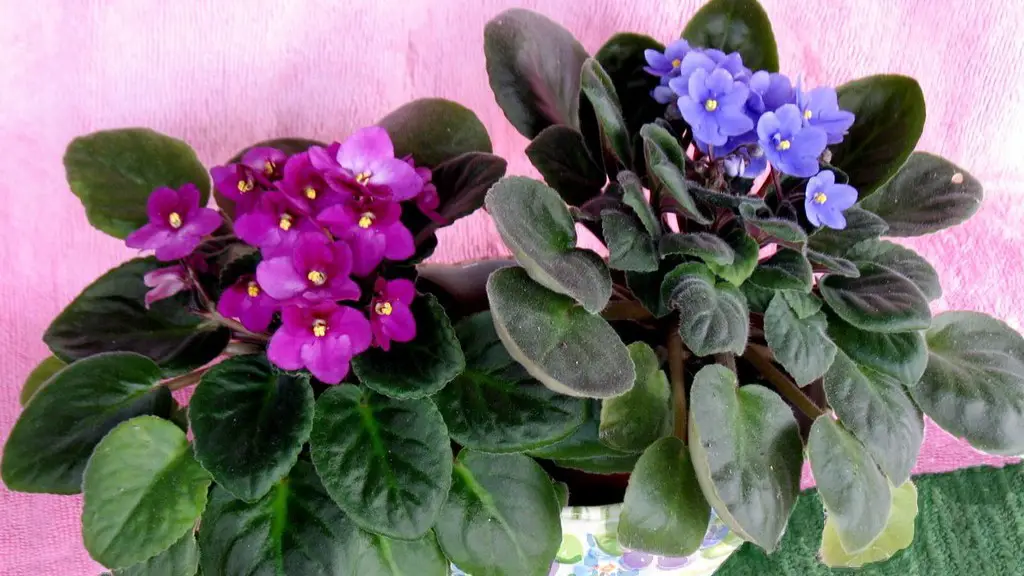
There are many different types of pots that can be used for African violets, but some are better than others. Clay pots are a good choice because they are porous and allow the roots to breathe. Plastic pots are also a good option because they are lightweight and easy to move.
The best type of pot for African violets is a clay pot. Clay pots allow for good drainage and air circulation, which is important for African violets.
Do African violets need deep pots?
African violets need shallow, breathable pots in order to thrive. Their roots don’t go very deep, so it’s important to use a pot that won’t be too deep for them. Your pot must also have suitable drainage holes so that you can water from underneath. You can also get African violet specific pots that have a terra cotta sleeve you plant in, and a water reservoir.
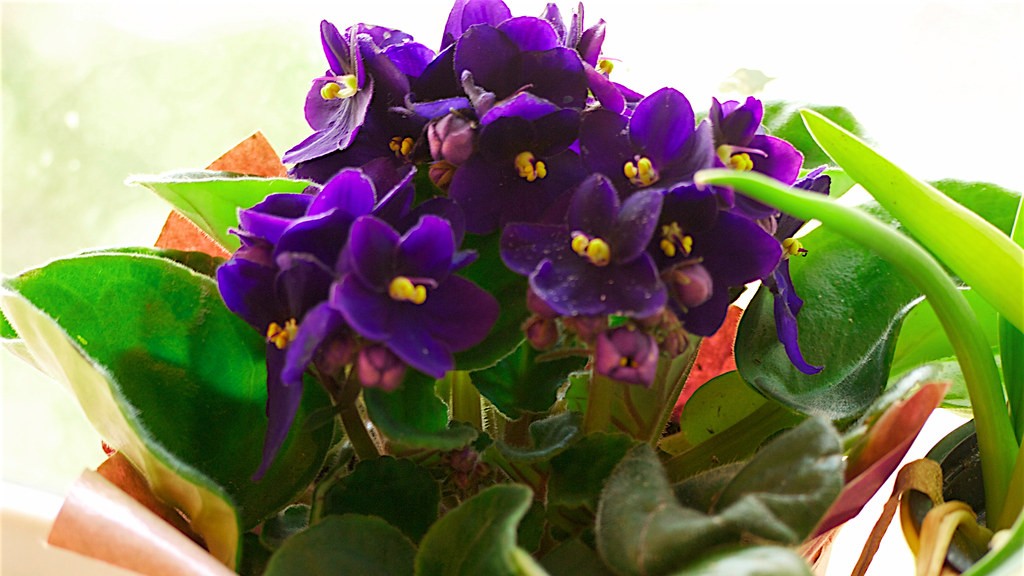
Clay pots are a great option for African violets because they are very porous. This allows for good drainage so that when you water your plant, the water doesn’t stay inside the pot and cause root rot. However, because clay pots have such good drainage, you may need to water your plant a bit more often.
Why do African violets need special pots
It is important to have a pot with good drainage for your African violet so that the soil does not become too damp and encourage root rot. A pot with good drainage will help your African violet to stay healthy and thrive.
African Violets are beautiful plants that are easy to care for. If you plant them in a pot that is the correct size, the leaves will be about three times the diameter of the pot. This means that if your African Violet’s leaves measure 12 inches, then you should plant it in a 4-inch pot. Always make sure that your pot has adequate drainage.
Is it better to root African violets in water or soil?
African violets are easy to root in water using a leaf. You can take the leaf from your existing African violets, or even from a friend’s plant. The quickest and easiest way to root them is to simply place the leaf in a glass of water and wait for it to develop roots. Once the roots are a few inches long, you can then transplant the violet into a pot of soil.
It is important to keep the soil moist to encourage blooming, but allow the soil around the roots to dry out before watering. Water from the bottom with room temperature water by placing the plastic grower’s pot in water, and allowing the plant to absorb the water. Do not leave the plant in the water for more than 30 minutes.
What should African violets be planted in?
If you want to grow healthy African violets, it’s important to use the right type of potting mix. African violet potting mix is light and loose, with a high percentage of perlite or vermiculite. This type of potting mix drains quickly, which is important for preventing root rot. You can buy African violet potting mix at most garden centers, or you can mix your own. Just be sure to use a light, fast-draining potting mix that’s 30 to 50 percent perlite or vermiculite. African violets should be planted in small pots and re-potted once a year to refresh the soil.
African violets should be placed in a location that receives bright, indirect light. A site near an east or north window is often a good location. African violets should not be placed in direct sun. If a suitable window isn’t available, African violets can be placed under a fluorescent light fixture containing two 40-watt fluorescent tubes.
How do I know if my African violet needs to be repotted
When repotting, be sure to use a pot that is only a size or two larger than the current one. African violets don’t like too much extra room in their pots because it can make it difficult for them to get the nutrients they need.
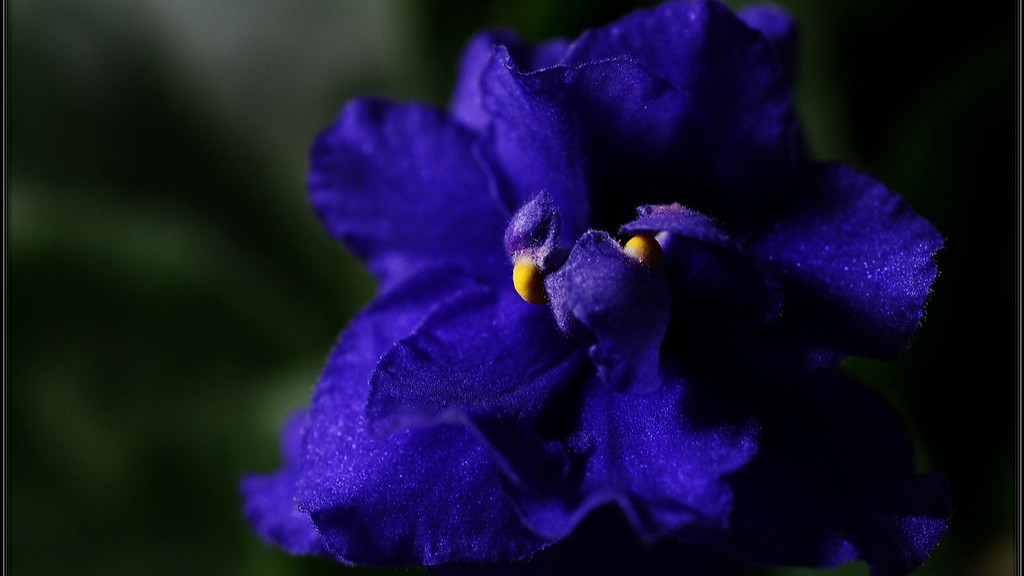
African violets need indirect sunlight, so choose a north- or east- facing window for best results. Keep plants away from cold glass and rotate the pot once a week so all leaves receive light. Extend daylight by placing African violets under a grow light during winter months.
How often should you water African violets?
A wicking system is a way of watering your plants that uses a container of water and a wick to slowly feed water to the plant. The container of water can be placed underneath the plant or next to it, and the wick will transport the water to the roots of the plant. This method of watering African violets is perfect for people who often forget to water their plants, as the plant will only get the water it needs and no more.
African violets need slightly acidic soil to thrive, with a pH between 58 and 65. In soil with a higher pH, the plant won’t be able to absorb nutrients as efficiently. To lower the pH of African violet potting soil, peat moss is often used.
Do African violets like being pot bound
African violets prefer to be root-bound to bloom well. This means that they should be potbound, or lightly rootbound, in order to bloom their best. It is good practice to periodically repot houseplants because the soil should be refreshed periodically. You can often repot the plant into the same pot after cleaning it well and using fresh potting mix.
If your African violet seems to be struggling, it might be because it’s too crowded. African violets like to be a little crowded above ground and below, but if it gets too tight, they can start to struggle. In fact, an African violet with too many leaves might even withhold its beautiful blooms—or stop growing altogether! If you think your African violet might be too crowded, try repotting it into a larger pot.
Should I water my African violet after repotting?
It is important to water your African violet after repotting, as this will help to compact the soil and stabilise the plant. However, you may need to add a little more potting mix to the top of the pot if the plant is not stable. Keep the pot small and shallow, as African violet roots generally do not grow deep or wide.
African violets are a type of plant that thrive in well-drained, slightly acidic soil. One of the best potting mixes for them is Miracle-Gro® Indoor Potting Mix, which has been specially formulated to provide the perfect growing environment for indoor plants.
Final Words
The best pot for African violets is a terracotta pot.
There are many different types of pots that can be used for African violets, but the best type of pot is one that has drainage holes in the bottom. African violets need to be watered often, so a pot that drains well is important. Also, make sure to use a potting mix that is specifically for African violets. These mixes will have the right amount of drainage and nutrients that African violets need to thrive.