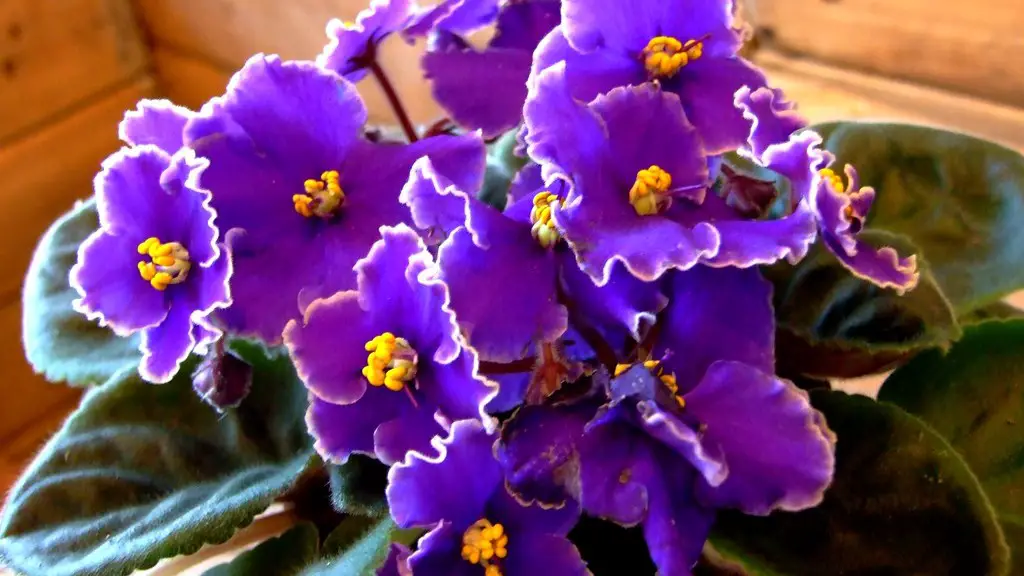
African violets are a type of houseplant that originates from Africa. They are one of the most popular types of houseplants, and are known for their beautiful, delicate flowers. African violets need to be watered about once a week, or when the soil feels dry to the touch.
Egyptian or African violets (Saintpaulia ionantha) are one of the most popular houseplants, and for good reason: They’re relatively easy to grow, they bloom continuously and they come in a wide variety of colors. African violets have relatively delicate leaves and blooms, so they need to be watered carefully. Over-watering can lead to root rot, while under-watering can cause the leaves to wilt. The best way to water African violets is to use lukewarm water and to water them from the bottom, allowing the plant to absorb the water through the roots. This method of watering helps to prevent the leaves from getting wet, which can lead to leaf rot. African violets should be watered about once a week, or when the soil feels dry to the touch.
What is the proper way to water African violets?
Watering your plants is important to encourage blooming and to keep the soil moist to dry. When watering your plants, make sure to water from the bottom with room temperature water by placing the plastic grower’s pot in water, and allowing the plant to absorb the water ( not more than 30 minutes ).
African violets need indirect sunlight. Direct sunlight can burn the leaves. Choose a north- or east- facing window for best results. Keep plants away from cold glass and rotate the pot once a week so all leaves receive light. Extend daylight by placing African violets under a grow light during winter months.
How often should you water African violets from the bottom
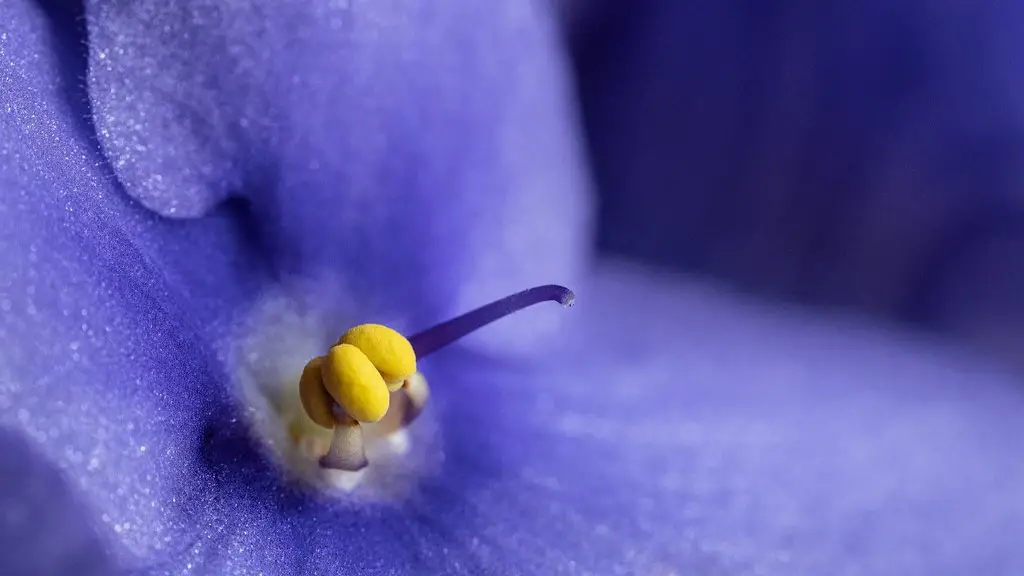
Your African violet houseplant is a tropical plant that is native to Africa. It is a succulent plant, which means that it stores water in its leaves. The leaves of the African violet are thick and fleshy, and the plant has a deep root system. The African violet is a perennial plant, which means that it can live for many years. The African violet is a member of the Gesneriaceae family, which includes other houseplants such as the Streptocarpus (Saintpaulia) and the Episcia. The African violet is a popular houseplant because it is easy to care for and it blooms all year round. The flowers of the African violet are violet in color, and they have a yellow center. The African violet blooms in the spring and summer, and the flowers last for about two weeks. The African violet is a low-maintenance plant, and it does not require a lot of water.
It is best to water African violets from the bottom. This allows the water to directly reach the roots without wetting the leaves. If you water from the top, be careful not to get water on the leaves when the plant is in the sun; this is to avoid leaf spots.
Is tap water okay for African violets?
If you are unsure about the quality of your tap water, it is best to err on the side of caution and use filtered or distilled water for your African violets. Chlorine levels can fluctuate depending on the season and in some areas, tap water may have high amounts of chlorine, chloramines, or dissolved solids. All of these things can adversely affect your African violets, so it is best to use filtered or distilled water if possible.
To clean African Violet leaves, mix a solution of liquid soap and water in a spray bottle. Spray the leaves and rub the top and bottom with your fingers.
Should African violets be misted?
African violets are susceptible to crown rot, so it is important not to mist the foliage or allow the crown to become saturated with water. Use room-temperature water to avoid leaf spotting.
When it comes to African violets, it is best to go with a pot that is on the smaller size. This is because these plants do best when they are slightly pot-bound. A good rule of thumb is to use a pot that is 3-4 inches in diameter for a standard African violet plant.
Where is the best place to put an African violet
If you want your plants to have the best color and blooms, grow them in bright, indirect light. An ideal location for a plant stand is three feet away from a west- or south-facing window. Plants will still grow when situated right beside north- or east-facing windows, but leaves will be thin and spindly, and plants less likely to bloom.
Over watering your African Violet plant can cause the leaves and/or leaf stems to turn soft, limp, or mushy. This is because the soil will retain too much water, causing the plant to not be able to get the nutrients it needs.
How long will an African violet live?
It’s best to repot African violets every one to two years, depending on the size of the plant and its pot. “If you see your plant start to crowd its pot or see shortage of growth, that’s usually an indication it’s time for a new pot,” McEnaney says. He also advises looking for any new roots that might be growing out of the drainage holes. If you spot any of these roots, it’s time to repot.
Your African violet is very particular about the water it gets. Make sure the water is either tepid or at room temperature before giving it to your plant. It’s best to let the water sit for 24-48 hours, but if you can’t, then at least let it stand for an hour. This will help ensure that your plant gets the best possible hydration.
How often do you feed African violets
Your African Violet needs fertilizer to stay healthy throughout the year. During the spring and summer, you should fertilize your African Violet once every 14 days. In the fall and winter, you shouldn’t fertilize the plant at all to prevent over-fertilizing.
Violets are highly susceptible to a number of deadly pathogens, such as Crown Rot and Pythium, if they are kept in excessive moisture. Much less serious, though still alarming, are the brown or yellow leaf spots which result from leaving water on the leaves.
Can you water African violets with ice cubes?
If you water your African violets with ice cubes, the cold water can damage the plants and cause discoloration. It is best to use room temperature water to avoid any potential problems.
One of the most popular houseplants is the African violet. They come in many different colors and can brighten up any room. They are also non-toxic, so they are safe to have around pets.
Warp Up
Generally, you should water African violets about once a week, giving them a thorough soaking so that water runs out of the drainage holes in the bottom of the pot.
The best way to water African violets is to allow the soil to dry out in between watering. Water the plants until the water runs out of the bottom of the pot, and then empty any water that remains in the saucer. Water African violets weekly, or more often if the plants are growing rapidly or if the potting mix feels dry.