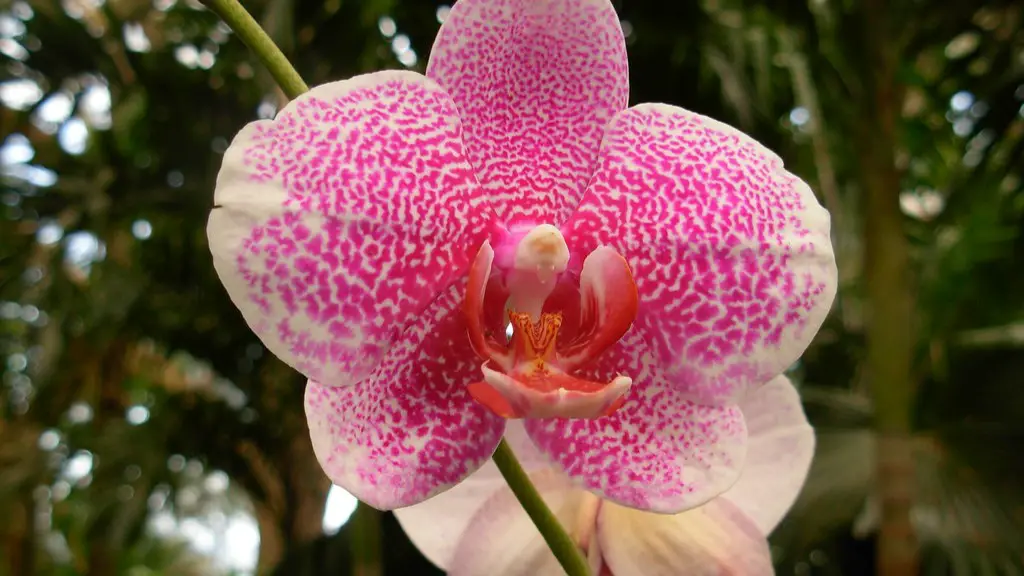
If you’re looking for a long-lasting and beautiful houseplant, the phalaenopsis orchid is a great choice. With proper care, these orchids can bloom multiple times a year and last for years. Here are some tips on how to care for your phalaenopsis orchid.
To properly care for a phalaenopsis orchid, it is important to understand the plant’s natural habitat and needs. Phalaenopsis orchids typically grow in humid, shady environments, so it is important to recreate these conditions when growing the plant indoors. The plant should be placed in an area with indirect sunlight and kept out of drafts. The potting mix should be well-draining and light, and the pot should be watered regularly, allowing the water to fully drain out each time. It is also important to fertilize the plant regularly with a balanced fertilizer. With proper care, a phalaenopsis orchid can thrive indoors for many years.
How often do you water a Phalaenopsis orchid?
If your phal is potted in bark, watering once a week is generally sufficient. If your plant is potted in moss, water when the top feels dry. The amount of light and heat your plant receives will also affect how soon your phal needs watering. Summer months will need more frequent watering, winter will need less.
It is important to provide your orchid with enough light in order to improve the chances of it reblooming. Place your orchid in an area that receives bright, indirect sunlight. The more light your orchid receives, the longer its blooms will last and the greater its chances of reblooming.
How do you take care of a Phalaenopsis orchid after the blooms fall off
Orchids are one of the most popular houseplants, and for good reason. They’re beautiful, long-lasting, and relatively easy to care for. With a little know-how, you can keep your orchid healthy and blooming for years to come. Here are a few tips:
Water your orchid weekly. Just because your orchid no longer has its blooms doesn’t mean you should stop watering it.
Fertilize your orchid monthly. Orchids need nutrients to bloom, so be sure to fertilize yours regularly.
Give it plenty of indirect light. Orchids do best in bright, indirect light. If you can’t provide this, you can grow them under fluorescent lights.
Move your orchid to a cooler room. Orchids thrive in temperatures of 60-80 degrees Fahrenheit. If your home is too warm, move your orchid to a cooler room or place it in a spot where it will get some afternoon shade.
Give some life to your dormant orchid. If your orchid hasn’t bloomed in a while, it may be in dormancy. This is normal and nothing to worry about. Just give it
Orchids are tropical plants that prefer warm temperatures between 60 and 80 degrees Fahrenheit. Avoid drafts, cold spaces, rooms with sudden temperature drops and hot air vents. Orchids flourish in air that is 50 percent humidity or above. They can do well in moist places such as by a kitchen window.
Should I mist my Phalaenopsis orchid?

Orchids love humid conditions because they are a tropical plant. The easiest way to recreate their humid home is by misting them with a spray bottle.
Orchids need humidity to thrive, and one way to provide it is to set the pot on a tray of pebbles and water. The water will evaporate and humidify the air around the plant.
What triggers flowering in Phalaenopsis?
Most phalaenopsis species are native to areas close to the Equator and do not need a specific photoperiod to induce flowering Instead, it is the low temperature that triggers phalaenopsis to start the flowering process.
Phalaenopsis orchids are beautiful flowers that make great houseplants. They can live for 10 to 15 years, and with proper care, they will continue to bloom for many years. These orchids prefer a warm, humid environment and bright, indirect light. watering them once a week should be sufficient, and they should be fertilized monthly. Be sure to check the leaves regularly for pests, and if you see any, treat them immediately. With a little TLC, your Phalaenopsis orchid will thrive and provide you with years of enjoyment.
Where do you cut an orchid after the flowers fall off
It is important to go to the bottom flower first and then cut the node right below it. This will help ensure that the flower stays in place and does not fall over.
Orchids are beautiful flowers that can bloom for several months at a time. They can be pollinated multiple times during this period, and it can take anywhere from 9 to 14 months for them to complete a life cycle. If they don’t die, they can typically re-bloom once every 8 to 12 months.
Do Phalaenopsis orchids Rebloom on the same stem?
To encourage your Phalaenopsis orchid to re-bloom, simply follow a few easy tips. First, allow the plant to rest after it has finished blooming. This means withholding water and fertilizer for about six weeks. Then, gradually resume watering and fertilizing according to schedule. Finally, provide your orchid with plenty of light and warmth. These ideal conditions will encourage your orchid to re-bloom.
Orchids are wonderful plants that can bloom for many years with proper care. They can even rebloom on the same old flower spike if it is still green. If you want to promote bushy and lush foliage, you can cut the old bare flower spike back to a node.
What does an orchid look like when it needs to be repotted
When an orchid’s roots start to push the plant up above the rim of the pot or reach out into the air, it’s a sign that the plant has outgrown its pot and needs to be repotted.
The best spot for growing orchids is a south or east-facing window. West windows are usually too hot, while north windows are too dark. If you can’t find a good location to grow your orchids, artificial lights are the last resort.
How often should you soak an orchid?
Orchids are a bit different than other houseplants when it comes to watering. The best way to water them is to soak the plant in a bowl of water once every week or two. This allows the moss to dry out somewhat in between waterings. If you keep the moss too moist, the orchid can rot.
Soaking your orchid for 10 minutes is a good way to saturate the roots and help them grow. It is important to allow the water to drain out completely after soaking, as orchids don’t tolerate sitting in water. Uneven watering can result in shallow or uneven root growth, so be sure to water evenly. After watering your orchid, feel the weight of the container; it should be heavy.
What part of an orchid do you mist
This is a reminder to spray the leaves and roots of your orchid in the morning. Hold the nozzle about 1 foot away from the plant and spray around all sides of the orchid until the leaves and roots are covered with a fine mist. Do not saturate the leaves. Repeat each morning as needed to raise the humidity.
Keikis are small, immature plants that typically form on the spikes of orchids. While it is possible to remove keikis from the mother plant and pot them separately, it is generally best to leave them attached until they are 1-3 inches long and have a small shoot and a couple of leaves. Once the keiki meets these criteria, it can be safely separated from the mother orchid and potted on its own.
Conclusion
Start by finding an orchid that suits your home. There are many different types of orchids, so do your research to make sure you are getting one that will thrive in the same environment as your other plants. Once you have your orchid, water it thoroughly once a week, making sure to drench the roots and getting rid of any excess water. Feed your orchid a high-quality fertilizer every other week. Be sure to follow the package directions carefully. Place your orchid in a bright, indirect location. Too much direct sunlight can scorch the leaves, but not enough light will prevent the plant from blooming. Allow the soil to dry out completely between watering. Never let your orchid sit in water, as this can lead to root rot. With proper care, your orchid will thrive and provide you with beautiful blooms for many years to come.
When it comes to orchids, Phalaenopsis orchids are some of the easiest to care for. With just a little bit of effort, you can keep your orchid healthy and blooming for years. Here are some tips on how to properly care for your Phalaenopsis orchid:
• Light: Phalaenopsis orchids prefer bright, indirect light. If you can provide your orchid with a few hours of morning sun, that would be ideal. However, too much direct sunlight can burn the leaves of your orchid, so be sure to place it in a spot where it will get some shade during the afternoon hours.
• Water: One of the most important things to remember when caring for a Phalaenopsis orchid is to not over-water it. The roots of this type of orchid are very fragile and can easily rot if they are constantly wet. Allow the potting mix to dry out completely before watering your orchid again. A good rule of thumb is to water your orchid once a week.
• Humidity: Phalaenopsis orchids thrive in humid environments. If your home is not naturally humid, you can create a humid environment for your or